
Chinampas are floating gardens—ingenious, man-made islands used for agriculture since pre-Hispanic times, especially in the Valley of Mexico
What Is a Chinampa?
In the south of Mexico City, lies one of humanity's most remarkable agricultural innovations: the chinampas of Xochimilco. These ancient structures constitute a living laboratory of sustainable development, a repository of Indigenous knowledge, and a critical ecosystem that continues to support both human communities and endangered species.
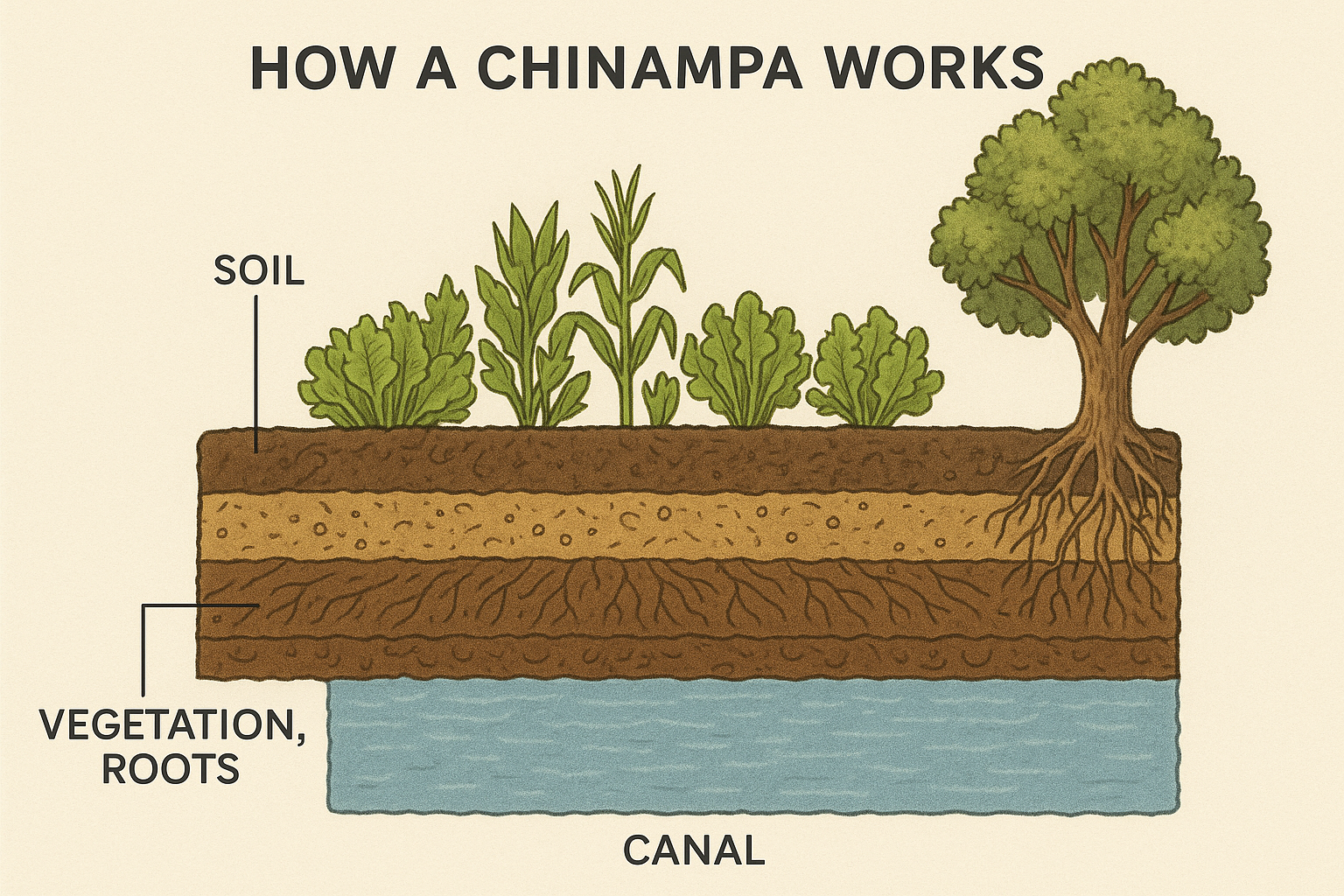
Chinampas are artificial islands created by Indigenous peoples in the lake system of the Valley of Mexico over 1,000 years ago. These "floating gardens" consist of raised beds built from lake sediments, organic matter, and vegetation, surrounded by canals that provide water, nutrients, and transportation routes. Their integrated design produces exceptional agricultural yields while simultaneously restoring the overall ecosystem.
At times identified as "floating gardens", chinampas don't actually float, but are anchored to the lakebed by the roots of willows and other native trees planted along their edges. This ingenious system creates a perfect microclimate for year-round agriculture while filtering water and providing habitat for countless species.
Why Chinampas Matter
Cultural: Recognized as part of Mexico’s national heritage
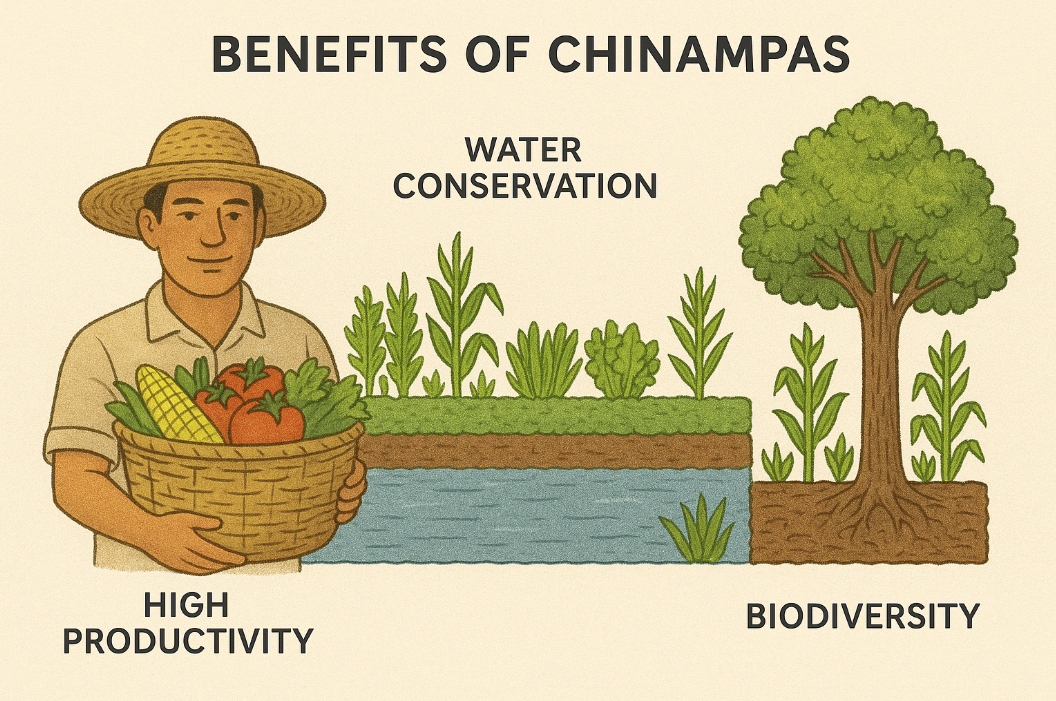
Chinampas represents one of humanity's most sophisticated agricultural innovations, recognized by UNESCO as a World Heritage site. They embody Indigenous Mexican knowledge systems that have sustained communities for millennia.
Ecological: Naturally purify water, increase biodiversity, and act as carbon sinks
Sequester 200-500 tons of CO2 per hectare in rich organic soils.
Filter water naturally, improving quality throughout the lake system.
Provide critical habitat for endemic species like the axolotl.
Create biodiversity corridors connecting urban and rural ecosystems.
Agricultural: Incredibly fertile, productive, and resilient
Chinampas demonstrate sustainable intensification - producing more food per unit area than conventional agriculture while building rather than depleting soil health
Current challenges
Water degradation, the introduction of exotic species, and urbanization have all contributed to the abandonment of numerous chinampas.
Additionally, women chinampa owners are facing a series of difficulties in the production reactivation process, despite having the intent to do so, amongst these: lack of resources, lack of formal training, and limited market access.
A Brief History
Built by the Mexica and earlier civilizations, chinampas formed the foundation of Tenochtitlan’s food system. Over centuries, many were abandoned - yet the knowledge endures among the remaining chinamperos.
The chinampa system originated with the Mexica civilization, who transformed the marshy Valley of Mexico into one of the world's most productive agricultural regions. At its peak, chinampas fed the massive population of Tenochtitlan, the civilization’s capital.
Spanish colonization disrupted but didn't destroy the system. Indigenous farmers continued cultivating chinampas throughout the colonial period and into the modern era. However, urbanization, pollution, and changing economic conditions have threatened their survival.
Today, only about 2,000 hectares of active chinampas remain in Xochimilco, down from an estimated 15,000 hectares in pre-Columbian times. The remaining chinamperos face economic pressure to abandon traditional farming or convert their land to other uses.
Regenerative Agriculture
More than just “organic,” regenerative agriculture restores ecosystems. On chinampas, it means enhancing soil fertility, biodiversity, and climate resilience - all while producing healthy food alternatives.
It is systemic rather than component-based, it fosters amplification of natural processes beyond mere restoration, and the temporal regeneration spreads across multiple temporal scales.
For more information, consult the chinampas initiative report here.
Chinampas naturally embody regenerative principles through:
- Soil Building: Continuous addition of organic matter creates deep, fertile soils
- Water Conservation: Efficient use of lake water with minimal external inputs
- Biodiversity Enhancement: Polyculture systems support diverse plant and animal communities
- Carbon Sequestration: Wetland soils store massive amounts of atmospheric carbon
- Nutrient Cycling: Integrated aquaculture-agriculture systems minimize waste
Etiqueta Chinampera & UNAM
We partner with initiatives like Etiqueta Chinampera and researchers from UNAM to promote quality standards, traceability, and scientific collaboration.
Etiqueta Chinampera is a certification developed by UNAM’s Ecological Restauration Laboratory (Laboratorio de Restauración Ecológica), that certifies traditional chinampa farming. Unlike typical organic labels that certify what farmers avoid, this label certifies the active regenerative practices that enhance ecosystems. It takes a holistic approach, evaluating ecological, social, economic, and cultural impacts together.
Today, seventeen certified producers are successfully commanding premium prices while preserving centuries-old techniques, proving that traditional knowledge can be both culturally authentic and commercially competitive in modern markets.
Featuring Our Chinampas Community
From Cass to other leading women chinamperos, we celebrate their role in reviving this ancestral system and are intent in preserving their autonomy and heritage.
 English
  Español de México